Pick of the Brown Bag
August 14, 2013
by
Ray Tate
The Pick of the Brown Bag explores Avengers Arena, Batgirl, Batman, Doctor Who, Fearless Defenders, Justice League of America, Nightwing, Red Sonja, Smallville, World's Finest and The X-Files.

Avengers Arena? What pray tell could have warranted my purchasing Avengers Arena?

'nuff Said?
I don't care about the story, but it's painfully well structured by Avengers Academy's Christos Gage. I don't care about surfer-dude Arcade, nor the beautifully characterized couples and hero teachers. I don't care about the alleged snuff movie nature about the whole affair, which Gage let me emphasize had nothing to do with.
All I care about is that Greer Grant Nelson comes out alive and looks good doing it thanks to the fantastic art of Karl Moline. Gage furthermore lovingly transplants a brain between those gorgeous furry ears. A must for Tigra fans. Tigra is love.
Fearless Defenders improves big time. Last issue Valkyrie atoned for her crime of murdering Annabelle Riggs by magically fusing with the formerly deceased archaeologist. This issue explores the ramifications of that mystical merger.
Hah! Actually, this issue is all awesome kickassery in which Misty Knight, Valkyrie and Elsa Bloodstone team-up with a weird rebel Brood to decimate the ninja flunkies of a Big Bad refugee from a period Shaw Brothers film, who is by the by genetically engineering Brood to serve as her army.

Elsa Bloodstone, Ninja and Brood. Who could ask for anything more?
In Justice League of America, Dr. Psycho conducts his bizarre experiments in my home town. However, Justice League of America are on hand to find out what he's up to. It doesn't go well for Dr. Psycho, and it's difficult to feel sorry for the little monster.

 Meanwhile, Plastique makes finding evidence from the fallen's corpse nigh impossible. This begs numerous questions, such as how did she get past League security. The Atom believes she has an answer.
In the entangled portion of the story, Batman, Deadman and Zatanna arrive back in the material world; Superman's still suffering from some unknown malady, and Pandora consults Lex Luthor, who ironically also does not buy Superman killing a Justice League of America member.
This chapter in the best company wide crossover since Final Night concludes with writer Geoff Johns and artist Doug Mahnke getting together for a memorable Wonder Woman moment. Strong chapter, recommended.
 Remarkable artwork from Emanuela Luppachino sets off a terrific story in World's Finest from series writer and co-creator of the Earth Two Huntress Paul Levitz. World's Finest has benefited from uniformly talented artists, but let's put Luppachino on permanently. This newish talent has a flair for the ladies, educing strength, smarts and sinew from each while accenting all the badness of Apokolips in Desaad.
Luppachino's choreography of Levitz's story begins with Power Girl following Desaad through a Boom Tube. Desaad captured Helena last issue, and Luppachino captures the determination in Power Girl's search for her friend. She as well livens up the fisticuffs with a smooth visual narrative that flicks back and forth between the teammates' predicaments.

Luppachino ably dignifies what could have been a spicy pulp situation, and Levitz also detracts from the feeling by demonstrating the differences between Batman's and Catwoman's daughter and the average heroine, like oh, I don't know, the post-Crisis Huntress. The daughter of two of the most cunning escape artists on earth two isn't going to be trapped anywhere for long.

World's Finest is the most consistently entertaining book DC publishes. Switching artists just leads to more great artwork. Paul Levitz steers a steady course, and it's just fun to watch these two super friends interact. World's Finest should be a staple publication on every subscription list.

Cat Staggs is becoming the go to gal for art. Smallville's cover is amazing. That can be nobody but Wonder Woman. Superman being reflected in her bracelets is an image that one can imagine would have been on the television series.
Ms. Staggs isn't behind the artwork inside, but that's quite all right. Jorge Jimenez does an astounding job detailing Bryan Q. Miller's rich introduction of Wonder Woman via Smallville.
Warner Brothers has a love/hate relationship with Wonder Woman that's well known midst the comic book reading public. The Powers That Be at Warner Brothers believe Wonder Woman is too complex to introduce in a movie or television series. I think they're a bunch of whiners lacking balls. Miller demonstrates that not only is Wonder Woman easy to reintroduce to the world; her very protean nature makes her a natural fit for any period.

Miller drops the red, gold and blue "satin tights" and opts for the secret agent white of the sixties. The difference is that Wonder Woman retains her powers and intellect. If he had done this for the television series, the free publicity would have been enormous, and unlike the pants Wonder Woman, it would have been good publicity. Every news agency would have pulled Dick Giordano covers and Mike Sekowsky art from their files. People would have learned a glimmer of the character's history and affect on pop culture.
Miller evolves his reintroduction of Wonder Woman in two periods. It all begins on Paradise Island where Princess Diana finds Steve Trevor washed up on shore, but here's the thing about that. Miller's version is totally different and funnier than any version of the well known myth. Jimenez's artwork in this portion of the book is positively charming.
Naturally an attack on Martha Kent brings Lois and Clark to the fore. What amazes me still is how easily Miller juggles his cast and never loses sight of each character's depth or humor.

Miller takes Lois and Clark to Martha's home, and there we have more great characterization, interactive dynamics in addition to the fantastic subtlety of Jimenez who here takes a page from the sublime expressions of Chuck Jones animation. This is the Superman book you have to own.

 Kindly ignore the pretentious cover of Batman Year Zero. The Dark Knight puts on a glove, oooo, I'm having a geekgasm. The story inside is way better. Scott Snyder opens his gambit with the Red Hood torching Bruce Wayne's apartment and beating the billionaire with medieval weaponry.
Ms. Staggs isn't behind the artwork inside, but that's quite all right. Jorge Jimenez does an astounding job detailing Bryan Q. Miller's rich introduction of Wonder Woman via Smallville.
Warner Brothers has a love/hate relationship with Wonder Woman that's well known midst the comic book reading public. The Powers That Be at Warner Brothers believe Wonder Woman is too complex to introduce in a movie or television series. I think they're a bunch of whiners lacking balls. Miller demonstrates that not only is Wonder Woman easy to reintroduce to the world; her very protean nature makes her a natural fit for any period.

Miller evolves his reintroduction of Wonder Woman in two periods. It all begins on Paradise Island where Princess Diana finds Steve Trevor washed up on shore, but here's the thing about that. Miller's version is totally different and funnier than any version of the well known myth. Jimenez's artwork in this portion of the book is positively charming.
In modern times, Wonder Woman debuts in Washington D.C. of course. She safeguards Senator Martha Kent from the forces of an old DC Big Bad whose ties to Diana can be found in the Bruce Timm Justice League.
Naturally an attack on Martha Kent brings Lois and Clark to the fore. What amazes me still is how easily Miller juggles his cast and never loses sight of each character's depth or humor.


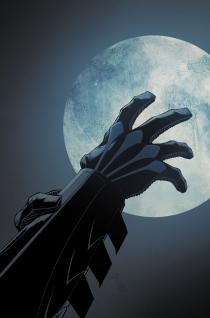 Kindly ignore the pretentious cover of Batman Year Zero. The Dark Knight puts on a glove, oooo, I'm having a geekgasm. The story inside is way better. Scott Snyder opens his gambit with the Red Hood torching Bruce Wayne's apartment and beating the billionaire with medieval weaponry.
The scenario exemplifies how technology improved comics. You couldn't have graphic novels without such pixel-free colors given more texture through digital blends. These vivid hues by FCO Plascensia just weren't available back in the day, and they enhance Greg Capullo's already startlingly good artwork.


I'm stunned at how beautiful Capullo makes Martha Wayne. The new 52 Martha Wayne is a helluva lot different from all the previous versions. Traditionally, Martha sported raven hair, and writers and artists tended to present her as a mere rich girl dedicated to her wealthy doctor husband. A nice person, certainly somebody you wouldn't want to see fall in Crime Alley, but nothing special. In the new 52, Martha's hair as you can see takes on a reddish brown luster. The changes however are more than superficial.
In previous Batman issues, Snyder fleshed out Martha Wayne into a lively do-gooder philanthropist. Jimmy Palmiotti and Justin Gray further nurtured the Wayne Family tree in All-Star Western. The end result is that these faces resonate. The Waynes are not merely memento mori. We can understand now that the loss Bruce felt isn't abstract. Martha's not some archetype or plot device. She was Batman's mother. That's who was snuffed out.
In dialogue Bruce's father gains substance, and it is he, concern filling his voice, that pulls young Bruce out of the bat cave. Most characterize Thomas Wayne as an older looking Bruce Wayne. Capullo brings an almost Dick Van Dyke friendliness to Bruce's dad. It softens the edge in the relationship Batman previously had with his father, which seemed to be a sort of old world respect.
This is the first time I really got the sense that Bruce's parents would be horrified by what Bruce turned into. They would have preferred that he enjoy a normal life, grow beyond their deaths. They seem less like harbingers and more like people. They wouldn't want their son to be Batman, yet they would be proud of Bruce's dedication for others.
 Snyder I felt stumbled last issue, but this issue is as solid as the opener. The non-linear narrative takes advantage of something that comics as a medium does extremely well; juxtapose events in the same story at different times with a natural split screen. The way in which the characters behave seems more authentic. Bruce isn't dense. He's lost. He doesn't know how to yet fight Gotham's more colorful criminals, but by the end of this issue, he will. The speed of his evolution into Batman also surprises me. This is only the third issue.
There's another aspect to Snyder's work that must be acknowledged. His adherence to the mythology of the Batman. This is especially evident with the birth of the Riddler. He gets fired. He loses his name. He becomes a criminal outlaw. That's all there. Snyder just uses different means to relate the knowledge.
 Nightwing pours on the grue for a cover that belies the truth of the pages. This is actually the best Nightwing's read since he arrived in Chicago. There's more daring-do and swashbuckling adventure than a dark pursuit of Tony Zucco.
Nightwing is back to joking around like Robin. So, it's almost as though writer Kyle Higgins woke up and looked at the sub-par stuff he has been writing. Higgins even reminds the reader that Nightwing isn't operating in a vacuum. As the Prankster's war in Chicago explodes, and Nightwing's presence becomes known, Sonia Zucco becomes the target of news reporters.

While Brett Booth's art was decent, it was also a little brooding. Buffy the Vampire Slayer's Will Conrad and colorist Andrew Dalhouse take a different approach. There's almost always a smile on Nightwing's face and a spring in his step as he kicks a bad guy in the face. This is definitely more like it.
With Batgirl, you can easily judge the book by its cover. Snarly Commissioner Gordon, and goofy symbolism in which Batgirl is strangled by scene-of-the-crime yellow tape. How on earth can this be any good?

It's like Gail Simone forgot every brilliant thing she did in the first two volumes of Batgirl, from characterization to basic technique.
So, Commissioner Gordon's got a Jones on to kill Batgirl, his daughter. He's seeking revenge for the memory of his psychopathic son James Junior, who Gordon believes Batgirl slew. James Jr. however is still alive, singing "Top of the World" and serving on the Suicide Squad. That part is not Gail Simone's fault.
Babs has taken a break from Batgirl because she's suffering guilt over killing her lunatic brother, who is still alive, singing "Walking on Sunshine" on the Suicide Squad. So, while she was on holiday, Babs decided to jump start her social life with former criminal lesser mind Ricky. That is Gail Simone's fault. This issue, we say good-bye to Ricky in the most unwittingly hilarious way possible.
To get from point A to point B in this story required multiple contrivances from the hack writer's notebook.

First you need to care about a character before you lose him. That didn't work at all on me, by the way. Simone tried to make the reader love Ricky by forcing the former carjacker down a Slip N' Slide on the reform rapids.
I was willing to accept that that one bad day shifted Ricky's outlook, however far fetched, but now the sudden change of heart appears to be part of a poorly executed plan, rather than punctuated equilibrium. So any good will I may have possessed over a low-rent criminal turned humanitarian just fizzled.
Next, you must somehow circumvent the unconvincing pesky altruistic calculus you had the character amass in order to place him in a ridiculously, lethal situation.

Ricky receives a call from the gang leader of the Sixty-Eight Kings who were hospitalized by Babs last issue. The gang leader uses a gun that Knightfall gave him to hold his brother hostage. Now, there's absolutely no reason why he needs a space gun in a situation like this, but he's got one, courtesy of extremist vigilantes who apparently grant "amnesty" to thugs occasionally.

What the hell? No, really. What the hell? This is a group of lunatics that set bear traps for carjackers, and suddenly, they're giving out space guns to groups of criminals that they deem, I don't know, less evil than themselves? And it wasn't even necessary. You can kill Ricky's bound brother with one of any number of items.

The Sixty-Eight King threatens Ricky's mom and his girlfriend. Why not threaten his dog while you're at it, and he demands that Ricky show up and take his space gun medicine. So, Ricky being the new Renaissance man that he is grabs his brother's ordinary pistol and does his poorest Gary Cooper imitation. He calls Babs to say his goodbyes, and oh, just as he's about to leave the cops show up.

So, Ricky turns into the great escape artist. That's right. Ricky just trumped Talon. With one good leg, mind you, our heart of gold former felon manages to stealthily slip out onto the fire escape, in the rain. Detective McKenna is there waiting for him. Somehow, however Ricky, the one legged man, in the rain, mind you, manages to overcome a competent police officer, who ends up incapacitated.
With Melody knocked out, Ricky can now plunge deeper and deeper into the abyss Simone has dug for this by all accounts loser of a character.
While this has been going on, Babs gets her Ninja on. She can't be Batgirl you see because she doesn't believe she deserves to wear the symbol. What with her killing her brother, who is by the way singing "Sunshine, Lollipops and Rainbows" over in Suicide Squad.
Babs intervenes as Gotham P.D. somehow tracks Ricky down, in the rain. Of course, maybe they're just after any guy in a drenched hoodie, which means Morbius better watch his own bad hoodied self.
Inside the Sixty-Eight Kings' hideout, we learn that Knightfall, the extreme vigilante maniacs who set out bear traps for carjackers, haven't just given out one space gun to a gang they granted amnesty to. They generously supplied a whole cache of space guns. Thank goodness because as it so happens, they need them at this moment against Barbara. Funny they weren't packing these things last issue. Oh, well. Space guns. With Babs hopping around to escape the energy beams, she can't contain her enraged father, who bursts in and starts shooting. What will happen I wonder?
The latest Gail Simone Batgirl is manipulative crap. Sheer unadulterated crap where you can so easily see the hand of the writer up the asses of the characters who act like complete dullards.
Apparently I'm due for some karmic payback. All those really great reviews I consistently rendered unto Batgirl needed some sort of cosmic balancing of the scales. Gail Simone doesn't just write one craptastic book this week. She writes two.

If you think I'm going to spend six or more issues watching Sonja suffer in some bizarre merger of barbarian times and chick flick coughing, you're out of your mind. The second issue of Simone's foray into the chain-mail bikini fashion world feels a lot like:

That said, artists Walter Geovani and Adriano Lucus are entirely blameless. Furthermore, many female illustrators decided to lend their talent to Sonja's covers. Jenny Frison produced the current one depicted above. It's exceptional work. The foreshortening on Sonja's leg is perfect. Her anatomy is wonderful, and the pose is singular. What a pity that the story couldn't be as stirring.

Last issue of X-Files, writer Joe Harris brought back the Lone Gunmen, and it just felt like bad fan-fiction. This issue the Cancer Man returns, but there's a huge difference and his resurgence works within the story.
X-Files aficionados will remember that once a band of aliens took the guise of a grown Samantha Mulder in triplicate, and that's what I believe is happening here. The Lone Gunmen however really were just brought back to life. Our Cigarette-Smoking Antagonist I believe is made of alien pixie dust.
It looks like I was wrong about the whole cult thing. I mean cult of aliens, but that doesn't really count. Artist Michael Walsh contributes an exciting battle between rival factions of spacemen and Scully, while another old friend from The X-Files appears to meet her maker.

The most surprising thing about the characterization however can be found in Mulder's dead-on persona yet totally opposite reputation. He's the most skeptical of all in this story. A clever turnabout.


I'm stunned at how beautiful Capullo makes Martha Wayne. The new 52 Martha Wayne is a helluva lot different from all the previous versions. Traditionally, Martha sported raven hair, and writers and artists tended to present her as a mere rich girl dedicated to her wealthy doctor husband. A nice person, certainly somebody you wouldn't want to see fall in Crime Alley, but nothing special. In the new 52, Martha's hair as you can see takes on a reddish brown luster. The changes however are more than superficial.
In previous Batman issues, Snyder fleshed out Martha Wayne into a lively do-gooder philanthropist. Jimmy Palmiotti and Justin Gray further nurtured the Wayne Family tree in All-Star Western. The end result is that these faces resonate. The Waynes are not merely memento mori. We can understand now that the loss Bruce felt isn't abstract. Martha's not some archetype or plot device. She was Batman's mother. That's who was snuffed out.
In dialogue Bruce's father gains substance, and it is he, concern filling his voice, that pulls young Bruce out of the bat cave. Most characterize Thomas Wayne as an older looking Bruce Wayne. Capullo brings an almost Dick Van Dyke friendliness to Bruce's dad. It softens the edge in the relationship Batman previously had with his father, which seemed to be a sort of old world respect.
This is the first time I really got the sense that Bruce's parents would be horrified by what Bruce turned into. They would have preferred that he enjoy a normal life, grow beyond their deaths. They seem less like harbingers and more like people. They wouldn't want their son to be Batman, yet they would be proud of Bruce's dedication for others.
 Snyder I felt stumbled last issue, but this issue is as solid as the opener. The non-linear narrative takes advantage of something that comics as a medium does extremely well; juxtapose events in the same story at different times with a natural split screen. The way in which the characters behave seems more authentic. Bruce isn't dense. He's lost. He doesn't know how to yet fight Gotham's more colorful criminals, but by the end of this issue, he will. The speed of his evolution into Batman also surprises me. This is only the third issue.
There's another aspect to Snyder's work that must be acknowledged. His adherence to the mythology of the Batman. This is especially evident with the birth of the Riddler. He gets fired. He loses his name. He becomes a criminal outlaw. That's all there. Snyder just uses different means to relate the knowledge.
 Nightwing pours on the grue for a cover that belies the truth of the pages. This is actually the best Nightwing's read since he arrived in Chicago. There's more daring-do and swashbuckling adventure than a dark pursuit of Tony Zucco.
Nightwing is back to joking around like Robin. So, it's almost as though writer Kyle Higgins woke up and looked at the sub-par stuff he has been writing. Higgins even reminds the reader that Nightwing isn't operating in a vacuum. As the Prankster's war in Chicago explodes, and Nightwing's presence becomes known, Sonia Zucco becomes the target of news reporters.

With Batgirl, you can easily judge the book by its cover. Snarly Commissioner Gordon, and goofy symbolism in which Batgirl is strangled by scene-of-the-crime yellow tape. How on earth can this be any good?

So, Commissioner Gordon's got a Jones on to kill Batgirl, his daughter. He's seeking revenge for the memory of his psychopathic son James Junior, who Gordon believes Batgirl slew. James Jr. however is still alive, singing "Top of the World" and serving on the Suicide Squad. That part is not Gail Simone's fault.
Babs has taken a break from Batgirl because she's suffering guilt over killing her lunatic brother, who is still alive, singing "Walking on Sunshine" on the Suicide Squad. So, while she was on holiday, Babs decided to jump start her social life with former criminal lesser mind Ricky. That is Gail Simone's fault. This issue, we say good-bye to Ricky in the most unwittingly hilarious way possible.
To get from point A to point B in this story required multiple contrivances from the hack writer's notebook.

First you need to care about a character before you lose him. That didn't work at all on me, by the way. Simone tried to make the reader love Ricky by forcing the former carjacker down a Slip N' Slide on the reform rapids.
I was willing to accept that that one bad day shifted Ricky's outlook, however far fetched, but now the sudden change of heart appears to be part of a poorly executed plan, rather than punctuated equilibrium. So any good will I may have possessed over a low-rent criminal turned humanitarian just fizzled.
Next, you must somehow circumvent the unconvincing pesky altruistic calculus you had the character amass in order to place him in a ridiculously, lethal situation.

Season Four? What Season Four?
Ricky receives a call from the gang leader of the Sixty-Eight Kings who were hospitalized by Babs last issue. The gang leader uses a gun that Knightfall gave him to hold his brother hostage. Now, there's absolutely no reason why he needs a space gun in a situation like this, but he's got one, courtesy of extremist vigilantes who apparently grant "amnesty" to thugs occasionally.

You probably thought I was exaggerating.
What the hell? No, really. What the hell? This is a group of lunatics that set bear traps for carjackers, and suddenly, they're giving out space guns to groups of criminals that they deem, I don't know, less evil than themselves? And it wasn't even necessary. You can kill Ricky's bound brother with one of any number of items.

The Sixty-Eight King threatens Ricky's mom and his girlfriend. Why not threaten his dog while you're at it, and he demands that Ricky show up and take his space gun medicine. So, Ricky being the new Renaissance man that he is grabs his brother's ordinary pistol and does his poorest Gary Cooper imitation. He calls Babs to say his goodbyes, and oh, just as he's about to leave the cops show up.

Roh! No!
So, Ricky turns into the great escape artist. That's right. Ricky just trumped Talon. With one good leg, mind you, our heart of gold former felon manages to stealthily slip out onto the fire escape, in the rain. Detective McKenna is there waiting for him. Somehow, however Ricky, the one legged man, in the rain, mind you, manages to overcome a competent police officer, who ends up incapacitated.
With Melody knocked out, Ricky can now plunge deeper and deeper into the abyss Simone has dug for this by all accounts loser of a character.
While this has been going on, Babs gets her Ninja on. She can't be Batgirl you see because she doesn't believe she deserves to wear the symbol. What with her killing her brother, who is by the way singing "Sunshine, Lollipops and Rainbows" over in Suicide Squad.
Babs intervenes as Gotham P.D. somehow tracks Ricky down, in the rain. Of course, maybe they're just after any guy in a drenched hoodie, which means Morbius better watch his own bad hoodied self.
Inside the Sixty-Eight Kings' hideout, we learn that Knightfall, the extreme vigilante maniacs who set out bear traps for carjackers, haven't just given out one space gun to a gang they granted amnesty to. They generously supplied a whole cache of space guns. Thank goodness because as it so happens, they need them at this moment against Barbara. Funny they weren't packing these things last issue. Oh, well. Space guns. With Babs hopping around to escape the energy beams, she can't contain her enraged father, who bursts in and starts shooting. What will happen I wonder?
The latest Gail Simone Batgirl is manipulative crap. Sheer unadulterated crap where you can so easily see the hand of the writer up the asses of the characters who act like complete dullards.
Apparently I'm due for some karmic payback. All those really great reviews I consistently rendered unto Batgirl needed some sort of cosmic balancing of the scales. Gail Simone doesn't just write one craptastic book this week. She writes two.

If you think I'm going to spend six or more issues watching Sonja suffer in some bizarre merger of barbarian times and chick flick coughing, you're out of your mind. The second issue of Simone's foray into the chain-mail bikini fashion world feels a lot like:

That said, artists Walter Geovani and Adriano Lucus are entirely blameless. Furthermore, many female illustrators decided to lend their talent to Sonja's covers. Jenny Frison produced the current one depicted above. It's exceptional work. The foreshortening on Sonja's leg is perfect. Her anatomy is wonderful, and the pose is singular. What a pity that the story couldn't be as stirring.

Last issue of X-Files, writer Joe Harris brought back the Lone Gunmen, and it just felt like bad fan-fiction. This issue the Cancer Man returns, but there's a huge difference and his resurgence works within the story.
X-Files aficionados will remember that once a band of aliens took the guise of a grown Samantha Mulder in triplicate, and that's what I believe is happening here. The Lone Gunmen however really were just brought back to life. Our Cigarette-Smoking Antagonist I believe is made of alien pixie dust.
It looks like I was wrong about the whole cult thing. I mean cult of aliens, but that doesn't really count. Artist Michael Walsh contributes an exciting battle between rival factions of spacemen and Scully, while another old friend from The X-Files appears to meet her maker.

The Time War is basically Doctor Who porn, and that's when writer Andy Diggle begins. Back in time on Gallifrey, the Doctor's home world, the Time Lords tending to the Matrix, a gestalt of deceased Time Lord minds introduced way, way back in the fourth Doctor story "Deadly Assassin" try to preserve their massive charge.
As this past piece unfolds, Diggle explains his idea of the Time Lords' and the Doctor's relationship. I foster the opposite opinion. I've always held that the Time Lords were always out to get rid of the Doctor, frequently redirecting his travels to suicide missions. Yes, they wanted him to succeed, but hey, bonus if the adventure finally offed the troublesome meddler.
In any case, it makes sense that the Matrix found refuge in the Doctor's TARDIS to escape the Time Lock the Doctor installed around the Time War.
Of course Diggle gets that one of the Doctor's weapons is his unconditional love of humanity. It's Clara, whom the Matrix predicts too late, that delivers the unexpected blow, rendered absolutely perfectly by artists Andy Kuhn and colorist Charlie Kirchoff.
 With the credible plotting comes Diggle's ear for dialogue. The Doctor explains the whole enchilada with his usual dramatic flair, and if you could close your eyes and still read the comic, you would definitely hear Matt Smith's and Jenna Louise Cooper's delivery.

As well, Diggle maneuvers his story to a spectacular, optimistic end that neatly solves the paradox of the information the Doctor freely gave to the trapped World War II crew.
As this past piece unfolds, Diggle explains his idea of the Time Lords' and the Doctor's relationship. I foster the opposite opinion. I've always held that the Time Lords were always out to get rid of the Doctor, frequently redirecting his travels to suicide missions. Yes, they wanted him to succeed, but hey, bonus if the adventure finally offed the troublesome meddler.
In any case, it makes sense that the Matrix found refuge in the Doctor's TARDIS to escape the Time Lock the Doctor installed around the Time War.
Of course Diggle gets that one of the Doctor's weapons is his unconditional love of humanity. It's Clara, whom the Matrix predicts too late, that delivers the unexpected blow, rendered absolutely perfectly by artists Andy Kuhn and colorist Charlie Kirchoff.
 With the credible plotting comes Diggle's ear for dialogue. The Doctor explains the whole enchilada with his usual dramatic flair, and if you could close your eyes and still read the comic, you would definitely hear Matt Smith's and Jenna Louise Cooper's delivery.
As well, Diggle maneuvers his story to a spectacular, optimistic end that neatly solves the paradox of the information the Doctor freely gave to the trapped World War II crew.


