Showing posts with label Martian Manhunter. Show all posts

Monday, February 28, 2022

POBB February 25, 2022

Pick of the Brown Bag
February 25, 2022
by
Ray Tate

Welcome to part two of the Pick of the Brown Bag's investigation into Christopher Chance, alias the Human Target.  Yes, you can also still find me on Twitter: #PickoftheBrownBag.


Tom King and Greg Smallwood team up to grant some respectability to the hit and miss DC Black Label brand.
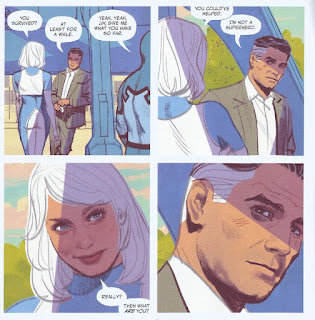

King's excursion blends two different genres beautifully: the detective novel and the science fantasy of the superhero.  In a first person narrative Christopher Chance discovers his time is limited.  

He seeks out the individual that either tried to kill him or inadvertently killed him, while aiming for Lex Luthor.  He interviews the suspects.  In between, he gets mixed up with the right kind of dame, or is she in fact a femme fatale?

The nature of the characters and the placement of Christopher Chance distinguishes his latest and perhaps last case from even the above average dead man walking mystery.  

DC's Black Label brand gave King the excuse to cut Christopher from the superhero world of DC.  Instead, he plants him right into it, which is historically proper.

The first book of The Human Target sets up the premise and introduces you to Greg Smallwood's artwork.  Smallwood is a vital part of the book's success.  His illustration, which looks like it's searching for its lost 1940s private eye novel cover home, suits the tradition of Christopher Chance's visual history of clean comic book artwork.

As Christopher lays "dying" his mind turns back the clock to when he accepted the Lex Luthor assignment and first partook of the poison.  Of special note, Christopher does not remember getting into his car, driving and crashing.  


Also notable, Lex Luthor calls the Justice League when his people find Christopher.  It's possible the poison guaranteed Christopher wouldn't travel far off the Luthor grounds.  It's equally possible that Luthor is setting up Christopher Chance to be bait, to lure the Justice League into a Byzantine scheme, quoting the Blue Beetle in Human Target book four.  

However because of Christopher Chance's familiarity with the superhero world, Luthor very well may be on the up and up and called the League because he felt that Christopher was one of them.  As a result of Luthor's call, Christopher ends up under the care of the original Dr. Mid-Nite.


Here again, King uses the Black Label to his advantage.  He doesn't need to explain Dr. Mid-Nite being the original.  He doesn't need to go into a footnote about how Dr. Mid-Nite and the rest of the Justice Society ended up alive and well.  They just did.  

This technique furthermore agrees with King's overall attitude when writing superhero books.  In Batman he recovered the entire chucked history of Batman and Catwoman.  So, seeing the Golden Age Dr. Mid-Nite hale and hearty in King's latest should almost be expected.

Dr. Mid-Nite proves he hasn't lost any of his skills.  He determines the nature of the poison.  He also points Christopher into the direction of the most likely and most unlikely suspects, the Justice League.


I'm not absolutely sure where the Bwa-Ha-Ha-Ha Justice League of the nineties lands in current DC continuity.  With Black Label I don't need to.  For this series, they existed.   

King expresses a familiarity with the Giffin/DeMatteis/Maguire Justice League throughout The Human Target.  That's great for fans of the heroes as well as followers of what appears to be a fair-play mystery.  Meaning, the motive for killing Lex or Chance must make sense and must agree with each suspect's personality.


In book two, The Woman arrives to complicate the detective's linear search for justice, or to help Christopher find the culprit.  I use the phrase The Woman quite purposely.  The femme fatale, the duplicitous love interest of the detective first emerged in the case files of Sherlock Holmes.  


Before Irene Adler, female characters in crime fiction were either good or either evil.  Never a complex blend.  All of the dames that betray Sam Spade, Philip Marlowe or have a change of heart and rescue Travis McGee and Lew Archer owe a debt to Doyle.  Surprisingly, Ice is The Woman in The Human Target.


Ice of the Justice League strongly derives from Icemaiden, a character created by E. Nelson Bridwell and Ramona Fradon, for the Super-Friends comic book series.  


Because of an error regarding Icemaiden's secret identity, the Justice League superhero grew ever more distinctive from her source.  Other writers and artists continued to diverge Ice's and Icemaiden's history as well as their appearance and behavior.

King takes a deep dive into Ice's history.  A lot of it completely unfamiliar to me.  I knew Ice died...somehow...having seen her as a ghost in a Justice League annual and witnessing a despondent Fire beg for J'onn to shape-shift into the form of her old friend.  Occurring in The Martian Manhunter.  

Ice in The Human Target relates two different histories--one mythical, which I vaguely remember, the other terrestrial; nope.  She identifies the old Justice League Detroit villain Overmaster as her slayer.  Drawing a blank.


Overmaster also somehow colluded with Lex Luthor, which I suspect is King's artifice.  Therefore most likely a red herring to give the Justice League motive to kill Lex.  Sorry.  Still not sold on any of the League poisoning Lex Luthor.

The entirety of book two offers the kind of melancholic mood one habitually finds in the classic private eye novel.  It's peculiar how Ice of all people works so smoothly as a female catalyst.  She at once conveys world weary wisdom, the image of the injured party and the enigma but never abandoning her bwa-ha-ha-ha origins.  As a character piece, book two of The Human Target is hard to beat.


Book three splits between Booster Gold and Guy Gardner.  Guy Gardner takes on the role of the "heavy."  He doesn't like Christopher Chance warming up to Ice, his ex.  


Part of what Guy does in book two answers the need for the detective to be beaten up in the novel.  The difference lies in Guy's independence.  Normally, the "heavy" is the lieutenant of the main crook.  Here, Guy acts on his own.  The Green Lantern element furthermore takes his harassment out of the detective genre.  

Guy's appearance, his behavior, his relationship to Ice all consolidate into a prime suspect, especially given the Lantern rings being subject to a Three Laws of Robotics code.  In other words, the rings cannot directly harm a life form even if the bearer wills it.  

If one harbors a grudge, but one cannot use his magic power to kill, poison may seem like a great idea.  Guy is also one of three people who first knew of Lex Luthor's hand in Overmaster's scheme.  


These facts draw Fire and Ice to the forefront of the suspect list.  Yet Fire and Ice could have kiled Lex in so many overt and subtle ways.  Guy not so much.

Yet I doubt.  Guy Gardner simply isn't smart enough to concoct such a scheme.  To emphasize, Christopher Chance demonstrates how easily it is to outwit Guy.  The scene also depicts that though Chance is on a mostly cerebral quest, the comic book isn't above action.  

Action-packed anything is often looked down upon by the snobbish.  I am certainly not one of those people.

The Booster Gold investigation goes as one may expect.  Booster Gold is hilarious.  


That reputation springs purely from Justice League, where Booster and Blue Beetle became the best of friends and a comedy double-act.  Before the League, Booster was a self-serving jackass out to upstage Superman.  Booster stole future tech to travel back into the past to become famous.  I can easily see that Booster poisoning somebody.

In Human Target, Booster is opening up one of what he hopes to be a bagel franchise.  


It's preposterous to suggest Booster has the brainpower, motive or want for revenge.  Furthermore, he would somehow need o ditch his robot companion Skeets.  Same reason as Guy's ring.  King in fact glosses over Booser.  Presenting him as a minor suspect, but he includes one interesting fact.  Booster cannot remember where he has been.  That could be simply Booster, or it may be a symptom of a grander solution to this mystery.  Overmaster controls minds.  Mind control will play a part in Human Target book five.  Booster also apparently could have obtained the ingredients to the poison, which seems to obvious a tell from King.  So, naturally, I'm dismissing it.


In the fourth book, Christopher and Ice go to question the Blue Beetle.  King and Smallwood really do a number on the Blue Beetle.  With Kirbeyesque abandon, they paint a striking picture.


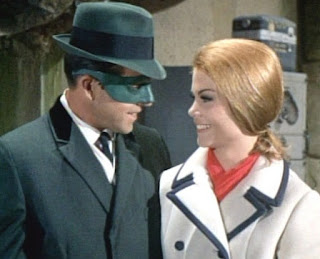
The Blue Beetle is a credible, albeit small potatoes, super-hero and a successful technology tycoon.  They also add a dash of Green Hornet, to Ted Kord's pursuits.  Like Lenore "Casey" Case, his secretary Nancy knows his secret.

Based on a 1939 public domain superhero, Ted Kord's Blue Beetle originated with Steve Ditko in Charlton Comics back in the sixties.  DC bought the Charlton characters when the company dissolved.  Though Blue Beetle features in Crisis on Infinite Earths, he made his biggest splash in Jon Ostrander's and John Byrne's Legends where the new Justice League formed.

Whereas Booster Gold isn't smart enough to pull off the murder of Lex Luthor, Blue Beetle is almost too smart to do it.  This is a stark contrast to the way Keith Giffin and J.M. DeMatteis portrayed Beetle in Justice League, but gibes with what he is supposed to be.

Smallwood presents Blue Beetle's intellect through his technology, and King depicts the Beetle's absurdity through the same.  Why does Ted Kord need some kind of replicator to don the Blue Beetle suit?


No idea.  Even if the suit's made of some kind of special fabric, the process seems superfluous but also the kind of comical quirkiness that you expect from a goofy character like the Blue Beetle.  Book four of Human Target is so off-kilter due to the Blue Beetle that it really needs to be accompanied by a mouth harp.

Beetle's tech knowledge originally described his purpose with the Justice League.  He was their pilot, and they traveled in Blue Beetle's Bug.  

The original Justice League of America didn't have transport vehicles like the Quinjet of the Avengers.  So many of the members flew under their own power they didn't need such transport.  You would often see Batman and/or Black Canary riding on a Green Lantern constructed platform.  

In the Bug, Beetle transports Christopher and Ice to various crime scenes dotting the country.  Blue Beetle doesn't have a territory like Batman.  He simply goes where the action is.  Although the action is very low level danger in comparison to the threats he and Ice faced in the Justice League.


Ice and Beetle team up, and it's here that Christopher notices something about the partnership.  This doesn't play into the mystery.  Rather it remarks on just how incredibly powerful almost every superhero can be given the specs of those powers.  

I frequently point out that Dazzler, created as a business deal with a rock singer, is incredibly, stupidly powerful.  All she does is use her mutant powers to create light shows and blind bad guys, but if she wants to, she can transform sound into a laser beam and bore a hole through the moon.  It's ridiculous.  


As he teams with Ice, Beetle dissects the reasons he could have killed Lex Luthor and the reasons why Lex Luthor may be behind the whole scheme.  


Throughout the Human Target, King predicts the reader's suspicion.  He brings up Lex as a suspect quite surreptitiously, but often enough to discount the labyrinthine thinker.  The biggest problem I have with Lex is motive.  I can only think of one possibility.  


Lex in fact detected the poisoned coffee, determined the nature, but couldn't deduce who in the League poisoned him.  So he set up Christopher Chance to do the legwork for him.  In this scenario, he may have even exploited the gunman that Christopher succeeds in stopping.  Perhaps even calculating how much poison Christopher would have thrown up after being shot.  Thus, Lex uses Christopher as a stalking horse to quietly cut down the League's murderous member and free himself from any possibility of payback, and yet...


Book five, the most recently published of the series, draws Christopher face to face with the Martian Manhunter.  

The Martian Manhunter began his career in 1955's Detective Comics.  He arrived on earth by accident.  


The Manhunter used his shape-shifting abilities to blend in with human society as Detective John Jones.  King parallels Christopher Chance and the Martian Manhunter on numerous levels.  You'll see how only if you read book five.

There is a lot of things going on in this chapter of The Human Target.  Some I cannot reveal.  What I can say is that the woman on the cover is not Diane Meade.  

Introduced in 1957, Diane Meade is an "emergency police woman"--no idea--and the Commissioner's daughter.   She fully joins the Martian Manhunter cast in 1960.


Though not Diane Meade, the woman on the cover is steeped in DC history and exemplifies King's ability to create complex characters.  She exists in Christopher's past. 


Other scenes in the book, demonstrate King's ability to add depth to already established characters and use the Black Label brand for the sake of legitimizing plot elements that could only be hinted at in a mainstream title.  


The expressive realism in Greg Smallwood's art contrasts the shifting tenses that can only work in a comic book.  Not just any visual medium.  The convoluted narrative expertly timed by Smallwood details Christopher's origin, his past meeting with the woman on the cover, his recent past with Ice, his present with the Martian Manhunter and the Manhunter's past.

This juxtaposition of scenes added to the DC history cements King's determination that Christopher Chance is part of a superhero universe.  Indeed, he must be.

For those following the mystery, this book is the big one.  The one where King divulges a lot of clues or generates devilish subterfuge.  

It sure looks like the guilty party reveals himself, but I don't know.  The revelation seems way too easy.  Notable, the guilty party doesn't explicitly admit to the crime.  In addition the stream of consciousness is somewhat unreliable.  How do we know the visuals we see haven't been influenced by Christopher's own experience?

Five books in, and I really don't know who poisoned Christopher Chance.  My best guess is still Lex Luthor.  However, who poisoned the coffee in the first place?  


I'm thinking G'nort, the hapless screwup dog Lantern.  Contaminated with the radioactive poison, he fell into the water used for Lex Luthor's coffee, or something like that.  I can't envision any of the Justice League raw enough to poison Lex Luthor.  None have a score to settle with Christopher Chance.  I also cannot help but wonder why King and/or Smallwood included G'nort among the heroes.  G'nort was at best a mascot, and King knows that.  They depict for a reason.

Wednesday, December 12, 2018

POBB December 5, 2018

Pick of the Brown Bag
December 5, 2018
by
Ray Tate

Welcome to the Pick of the Brown Bag.  I'm Ray Tate, and I take the hits for you, so you don't waste your money on trash.  This week's contenders include Batman, Doctor Who, Immortal Hulk, The Martian Manhunter, Nightwing, Red Hood, Star Trek/Transformers, West Coast Avengers and The Wrong Earth. As always, should you not have the time to check me out here, I'm on Twitter: #PickoftheBrownBag.


In 1955 Detective Comics, Professor Erdel mistakenly transported Martian scientist J’onn J’onzz to our world and died from a weak heart before he could reverse the polarity of the neutron flow. 


Stranded, J’onn assumed the form of a nondescript human named John Jones, joined the police force and put his superior mind and power to work against crime, which Martian evolution eliminated long ago.  


Diane Meade entered the picture in 1957 under the terribly titled story  “Female Nemesis.”  She crimped J’onn J’onzz’s style something fierce.  Her femininity however had nothing to do with it.  J’onn worked best when alone.  Then he could employ a vast array of powers.  

Diane eventually becomes a full cast member and an unwittingly progressive love interest.  Despite being a green-skinned alien, J'onn in the original adventures didn't face the kind of racism you expect.  Men shake his hand.  Women kiss him.  Diane wants bed him.


Actually, Kermit…

J’onn with Batman, Superman, Wonder Woman, The Flash, Aquaman and Green Lantern establish the Justice League.  He becomes the face of the Justice League in the Post-Crisis.  J.M. DeMatteis and Mark Badger tweak some of his mythology in a funky mini-series.  They reveal J'onn's native form, which Bruce Timm and company will use in the animated series Justice League.


Jon Ostrander and Tom Mandrake succeed in giving J’onn his own comic book.  Taking a page from another Martian Manhunter series American Secrets, they firmly establish J’onn’s longevity and wisdom by equivocating his fictional and historical introduction.  In fiction-context, among the DC heroes only Wonder Woman is older than J’onn.

Steve Orlando reintroduces J’onn J’onzz in a new miniseries, and boy howdy does it suck.  Instead of making J’onn, a scientist or a Martian detective as some reorganized his origin, Orlando turns J’onn into a Martian mob enforcer who lords over Mars’ seediest sections.


Orlando’s short run on Wonder Woman knocked me out.  This is Orlando at his worst.  Orlando grafts Hawkworld onto The Martian Manhunter.  It's a nightmare.

Tim Truman reintroduced Hawkman and Hawkgirl in Hawkworld during the nineties.  Hawkworld served as a wrecking ball to continuity.  In Hawkworld, Katar Hol and Shayera Thal deal with their historical enemy Byth, but Byth in this story is a crooked cop/drug addict and dealer.  He trades in Krotan which allows the user to change shape.

The shape-shifter J'onn is a crooked cop on a gritty Mars, that eschews the Utopian pulp source material.  This latest version of Martian Manhunter also serves as a wrecking ball to continuity.  It appears a drug from Mars called Fright Foam made its way to earth where John Jones and Diane Meade investigate a domestic homicide.  Show me how this story differs from Hawkworld.  The only minor change is that J'onn is both present tense protagonist and past tense antagonist.

Although, I suppose Orlando's real question is how did a Martian scumbag turn into the heroic Maritan Manhunter.  This mini-series opts to answer a question that until now didn't need posed.  J'onn J'onzz never was a Martian scumbag.

The best shake-up of the Martian Manhunter’s lore occurred outside of DC Comics.  Ever since former Alias and Mantis star Carl Lumbly voiced the Martian Manhunter so eloquently in Justice League, black actors portrayed the Martian Manhunter.  Phil Morris essayed the character on Smallville and now David Harewood on Supergirl.  It puzzles me why Orlando and artist Riley Rossmo maintains his historical whiteness, albeit in a grotesquely cartoonish caricature.


As to Diane Meade, I could laud her rank as detective, but Mark Waid and Brian Augustyn did it first.  So, instead, I’ll ask what the hell’s up with the Johnny Bravo hair?


In summary, The Martian Manhunter is derivative, repulsive due to a betrayal of J’onn J’onzz’s character, white and rife with take-it-or-leave-it artwork better suited for the Ralph Bakshi Mighty Mouse series from the 1980s.  Mind you, probably no other artist better captures the protean sex lives of Martians.  Of course, I really didn’t ask for that.


In the last issue of Doctor Who, a group of aliens known as the Grand Army of the Just surrounded the Doctor and friends as they investigated the appearance of a human wearing a Vortex Manipulator, forever known in Doctor Who parlay as “cheap and nasty time travel.”


Captured, the Doctor, Yaz, Graham and Ryan attempt to use their resources to make good from a bad situation. Naturally, the Doctor is a few steps ahead of everyone and smoothly orchestrates their escape.


Tone, comedy and dialogue along with Rachel Stott’s superb art capture the look and feel of the new Doctor Who.  Although occasionally Jody Houser’s dialogue gets a little repetitive when factoring in the premiere.  No doubt due to the freshness of Doctor Who's new season.

Doctor Who’s plot thickens as our neophyte time traveler introduces himself and relates a judicious smattering of facts but not the whole truth.


He and his partner are prisoners of the newest Doctor Who Big Bad, a beast that looks a little like Anubis but probably unrelated to the Egyptian Gods the Doctor’s already met in the series and in the comic books.  He's not an established Doctor Who creature, folks.  So revealing his presence isn't a spoiler.


Congratulations to Scott Lobdell who did what I thought impossible.  He raised Batwoman from flatline to mediocre. 


Batwoman and Red Hood followed breadcrumbs that led them to a criminal organization nesting in a Mayberry like town.  

The townsfolk overcame Jason through sheer numbers and left him to be killed by a Solomon Grundy stand-in.  Batwoman showed up and the battle did begin.


Batwoman's team-up with Jason Todd is notable because Lobdell ticks off all the boxes that comprise the unconnected background of Batwoman.  She talks military since she was a soldier: “hostiles,” “fall back” and “advantage to press.”  

Because of her soldiering, she’s no mean fighter.  However, as far as I know, Batman never trained her.  So, she shouldn’t really be equal to Jason or any of the immediate Batman Family.  


I suppose you can argue that maybe, just maybe, a really good soldier can plausibly take out the Grundy robots—cleverly named Mondays.

Oh, and Lobdell doesn’t forget to remind the reader why Batwoman exists in the DC Universe.


She’s gay.  No, I’m not disparaging the LGBT community or LGBT characters.  I support LGBT.  However, I’m as interested in this Batgirl-substitute as much as I’m interested in any Batgirl-substitute.  Not at all.

Lobdell furthermore goes above and beyond to make Batwoman almost tolerable. He gives Batwoman a touch, just a touch of humanity.  She conveys her condolences to Jason.  This is probably the first time Batwoman ever managed an emotion.


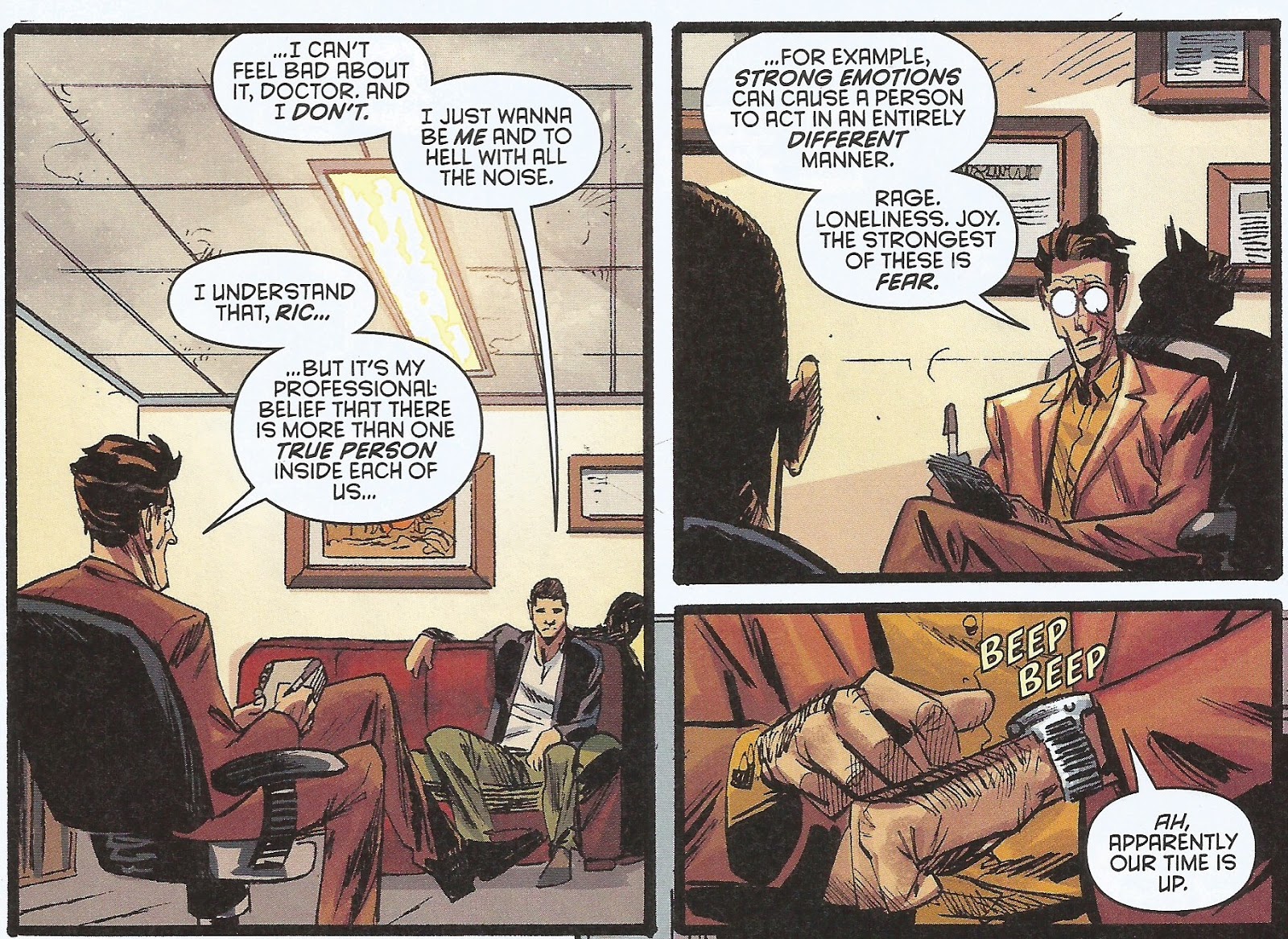
Dick Grayson currently suffers from amnesia caused by the trauma he experienced in Batman  He’s now Ric Grayson, happy-go-lucky taxi driver and scrounger trying to forge a new life.  Because of his injury he must seek out mental counseling, and sister, does he choose the wrong doctor.


That is Jonathan Crane, also known as the Scarecrow, currently enjoying Arkham Asylum’s revolving door policy.  As previous issues of Nightwing intimated in flashback, Johnathan Crane hates Robin because he refused to succumb to fear.  Indeed, the lad appeared to harbor no fear.  

While Ric Grayson goes to counseling and tries his luck at love with the local barkeep, a group of like-minded public servants attempt to take Nightwing’s place.  It takes a village to be Nightwing apparently.


Soon, the cadre is making waves in the media, and because of the vague similarity between cop and hero, the reporters don’t drop the penny.  


I'm not a Nightwing fan but Scott Lobdell and Fabian Nicieza make this book difficult to drop.  Art by Gary Brown and Will Conrad blend well together despite fostering different styles.  Ric Grayson isn't a bad character, and the idea of spreading Nightwing amongst a span of police and firefighters is intriguing.  The new Nightwings are also decent heroes being fleshed out with each issue.  The inclusion of the media demonstrates that in this day and age, it's almost impossible to be outside of camera range.  That doesn't however trip up the game.  

A lot of the book reads true.  Ric Grayson is essentially a new character.  He doesn't understand why his family cannot accept him the way he is.  Without the capes and the cowls, the saga would almost be a no-frills drama.  


Two Dragonflies.  Two earths.  The dark Dragonfly comes from the corrupt, gritty earth.  Dragonflyman is a lighter crimefighter from a more optimistic parallel world.  

Dragonfly’s arch-nemesis is a psychopath called the One, who with criminal mastermind the One used a mirror to cross earths.  The Dragonflies followed. 

In this issue, Dragonflyman demonstrates his innate martial skill and an overall sadness in response to Dragonfly’s cesspool of a planet.  At the same time, he effects change for the better.  

Meanwhile, Dragonfly confronts the happier hero’s contacts.
The Wrong Earth takes a simple idea and digs deep.  The story and art by Tom Peyer and Jamal Igle, respectively, doesn’t actually judge which earth is the better of the two.  Instead, Peyer and Igle study the framework of both genres and pull out examples and insights.


Dragonflyman does seem to protect the rich, and that’s because his type of story evolved from the cozy mystery where a body is found in the library of a country estate.  Nobody questions the wealthy’s privilege.  They're in a sense part of the background, something you need to accept in order to get to the who done it.

The way Dragonflyman behaves however indicates that he protects all citizens of his world and feels the weight of the disenfranchised and the victims of crime.  He, like Bruce Wayne, operates under the principle of noblesse oblige. 

The darker Dragonfly’s type of mystery arose from the private eye novels where corruption is rife, crooks come in the flavor of higher classes of people.  So, naturally, the corruption spreads, and few can maintain their integrity.

Stinger, Dragonflyman’s sidekick, also opens up a door.  Mortally wounded by the One, the other One’s henchwench Deuce helped the parallel alien Dragonfly take the lad to a hospital.  Dragonfly sat at Stinger’s bedside and displayed his humanity toward the stranger with a familiar face.  Dragonfly lost his Stinger, and the boy’s death motivated him in a different direction.

Deuce in another scene duped a jury into releasing she and the flunkies on their own recognizance.  While it’s true that Deuce acted out of pure kindness and empathy toward the fallen Stinger, she’s not above using that act to secure her release.

The sixties Batman show wasn’t just notable for its male rogues.  The female of the species demonstrated equal wit and guile.  The Batman gallery of gunsels considered Catwoman, Marsha Queen of Diamonds, the Siren and Olga equals among them.  


It’s no real surprise when Deuce amusingly proves to be smarter than the psychotic One and more than capable of dealing with him.  The One simply underestimates Deuce because of the inherent sexism of his era.  Whereas on Dragonflyman’s earth, women have enough smarts to take over a gang.


In the last issue of Batman The Penguin told Batman the truth.  He’s being played by a master chess player.  Batman confronted the gamesman and in the heat of the moment broke the faith between he and Commissioner Gordon.  This chapter is about the repercussions of that confrontation.


Tom King, Mikel Janin and Jorges Fornes juxtapose Batman’s relentless search for information—read beating the crap out of every one of the costumed criminals loose in Gotham City—with Commissioner Gordon’s slow shift in attitude.  This inner turmoil explodes in a frustrating moment that’s tinged with schadenfreude.


Just when you think you have a handle on the situation, Batman returns home to find a guest in the Batcave.  His presence threw me off completely.  So, well done Tom King.


The Immortal Hulk in addition to opening a major new twist in the story christens and defines Gamma Flight.  Not exactly Hulkbusters as much as Hulk mitigators.


The group directly contrasts the pulp inspired Shadow Base, out to kill the Hulk.  There’s simply no way an agent named Burbank can work for the Shadow Base and not be an allusion.

In addition, General Fortean seems to be straight out of the Men’s Adventures magazines from the nineteen fifties.


Writer Al Ewing draws all these factors to Los Diablos, where Bruce Banner saved Rick Jones from a gamma bomb that irrevocably altered his life.

This sequence of events started because of secret villain.  A specter possessed a townie that stabbed Walter Lankowski, killing him in the process.  Gamma irradiated people however appear to be immortal.  So, the apparition possessed Lankowski as he turned to Sasquatch.  The wraith then puppeteered him into battle against the Hulk.

Ewing basically used the entirety of John Byrne’s run of Alpha Flight as foreshadowing.  Byrne established that Sasquatch actually harbored a demon called Tanraq.  Teammate Snowbird subsequently rips out the heart of Tanraq/Sasquatch.  Ewing once again used Sasquatch as a vessel.  Indeed, the gamma irradiated seem particularly susceptible to this kind of hijacking.

The Hulk absorbed Sasquatch’s gamma radiation, in turn absorbing the ghost.  Scientific ghost-chasers often give an explanation for their quarry through quantum physics.  So, let’s say that the apparition bonded to Sasquatch’s irradiated ions.  The Hulk then took those ions into himself. 

The Shadow Base convinced the Absorbing Man to “serve his country” and undergo experiments that turned him into a gamma capacitor.  So when he duked it out with Hulk, he absorbed the Hulk’s radiation and the ghost in the machinations.

Because Creel doesn’t possess the Hulk’s willpower, he fell as a pawn to the supernatural, and led the Hulk and his pursuers into a trap.  The Immortal Hulk exemplifies an engrossing blend of science fiction and horror,.  You simply never expected such complexity from a Hulk series.


The West Coast Avengers opens with Captain America calling Kate Bishop and chewing her out probably in the nicest way over her use of the name West Coast Avengers.  This name-game also occurred in Astonishing X-Men.  The humor presented by writer Kelly Thompson is a different sort.  It's more Kate-centric.


The scene cuts to an earlier confrontation with a loser bad guy called Gridlock that also allows Thompson to introduce her team to new readers and artist Danielle Di Nicuolo to strut his stuff.

From there, the Mayor of Los Angeles asks the West Coast Avengers to investigate some unusual happenings.  Alas, it's a trap.  Not a spoiler, and calling America Chavez ushered in new problems for Kate.


Despite promising not to split up and fall into horror movie cliches, the orchestrators of this danse macabre have other ideas.  Quentin Quire and his lady Gwenpool find themselves stuck in a Tunnel of Love.  Hawkeye and America a hall of Mirrors.  Kate and Fuse a weapons gallery.


Watching the heroes work things out is part of the pleasure of the West Coast Avengers.  The deconstruction of the attacks demonstrates their under-the-belt experience.  If the heroes weren’t so readily ambushed, they may have figured out that the attacks originate from multiple foes that I expect will become the new Masters of Evil.

One of these antagonists is a personal favorite.  I’ve always considered her a hero, but she possesses the background to vacilate between good and evil.  Her motivation no doubt is a good one.


In this issue of Star Trek/Transformers everything you want to happen, everything you didn’t even dream of happening in such a crossover happens.

Decepticons attacked a Federation Base and soon allied with the Klingons.  Captain James T. Kirk and the crew of The Enterprise entered the picture on a rescue mission.

Encountering Autobots and Decepticons, Kirk and company mistakenly wound Optimus Prime.  After a Vulcan mind-meld however, Spock determines Prime to be fascinating and good.

Too late the heroes.  Because the Decepticons and their alien cohorts attack The Federation personnel and Optimus Prime.  This forces them to retreat into the caves where the Autobots hibernate.  

Jim convinces Ratchet than he and his crewmates are on the up and up, and this collusion leads the rousing moment of pure imagination.


Respectful of Star Trek, particularly Kirk, and the Transformers.  Done in the style of animation and with a complement of cartoon additions, Star Trek/Transformers is a must for any fan.


The CW Elseworlds Batwoman 


Better, stronger and more human.  Ruby Rose's portrayal of Batwoman as well as her new history far, far exceeds the piss-poor substitute-Batgirl from the comics.  

Rose and the director appeared to base her movements on Michael Keaton's Batman.  


This is noticeable especially when she pulls out a grappling hook gun and proceeds to decimate the criminal element of Gotham City.  Blake Neely the superb composer of all the CW superhero shows also gives Batwoman a decidedly Elfman-like theme.

Rose furthermore imbues more depth to Kate Kane.  In comic books, you can mistake Kane for a mannequin.  Not so in the Elseworlds special.  Rose imbues an aura of complete relaxation to Kane and rather than being a rich, layabout, Kate in the television series attempts to use her fortune to better Gotham society.

S
P
O
I
L
E
R


A
H
O
Y

Batman is an urban legend on the Arrow/Flash earth, but on Supergirl's Earth, Batman is a known quantity.  The writers wisely do not retcon Kara's knowledge or the hints of Batman in Supergirl. They instead use these setups to propel the story forward and cut to the chase.  


While Barry and Oliver have no idea how to start a search for the Batman, Supergirl quietly pushes them in the right direction without compromising Bruce's secret identity.  

In a replication from the Birds of Prey television series, we learn that Batman left Gotham City.  Kate took over Wayne Enterprises and his role as protector.  

Kate and Bruce are on more friendly terms.  There's a suggestion that they grew up together.  It's likely that Batman trained Batwoman in this mythology.  Given that Arkham inmates immediately fear Batwoman, Batman and Batwoman may have also been partners in crimefighting, 

There appears to be no Batwoman on Supergirl's earth, but they shake hands and in dialogue allude to the brilliant Elseworlds Finest by Barbara Kesel, Matt Haley and Tom Simmons.  In that reimagining Barbara Gordon became Batgirl when Joe Chill shot her father, who saved the Waynes.  In short, I'm in.  I'm ready to watch Batwoman.