Showing posts with label Krul. Show all posts

Monday, September 9, 2013

POBB: September 4, 2013


Pick of the Brown Bag
September 4, 2013
by 
Ray Tate

This week in the Pick of the Brown Bag, I review new Dynamite title Codename: Action and the latest issue of The Owl.  I'll also look at the new universe of Ami-Comi Girls, and to get the ball rolling, it's a spoiler ridden review of Forever Evil.  Don't skip ahead yet though.  I'll give you ample warning when I'm ready to divulge.
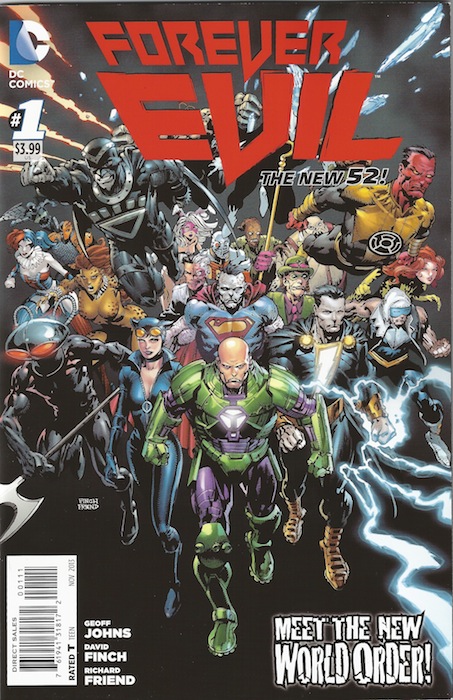

I'm recommending this title for it's sheer audacity. Forever Evil puts the kibosh on four storyarcs from Nightwing, Batgirl, Batman and Superman, without so much as a by your leave.


Lex Luthor was working to secure his release from prison in Superman and Action Comics.  Now, he's out and reacquiring assets, while gaining new ones.  At least that was the plan.


After Death of the Family, The Batman Family treated Bruce as a pariah.  Barbara Gordon declares this alienation over, and you don't argue with Batgirl.


Nightwing went to Chicago to discover the truth about the killer of his parents, Tony Zucco.  Along the way, he encountered a new villain called the Prankster, but you can forget that.


Babs also made a bid for the Oscar for Best Guilt-Ridden Maven.  After wrongfully thinking she killed her psychotic brother, who is currently serving in the Suicide Squad glee club for the equally nutso Amanda Waller, Babs ripped the bat symbol off her chest, and then stopped wearing the costume all together.  As you can see, she got over it.


Oh, and by the way, Ms. Oback.  Babs' eyes are blue, baby.  They're blue.  They've always been blue.  They always will be blue.  Blue.

I can see the talent behind these tales being miffed, but the reader shouldn't feel the same.  


The story developments weren't exactly brilliant or groundbreaking, and they would have petered out anyway.  So, I'm not really sorry to see Forever Evil writer Geoff Johns obliterate them in one fell swoop.

S
P
O
I
L
E
R


A
H
O
Y
!

Pandora's Box turned out to be the Mother Box of Earth 3. It was a teleportation device meant to transport the Crime Syndicate to a new venue to conquer.


For those unfamiliar with the history, the Crime Syndicate first appeared way, way back in Justice League of America #29.  They've since made numerous returns to vex the Justice League.  These core members continue to serve evil in the new 52, only now with Atomica--the artist formerly known as the Atom, Deathstorm, a skeletal analogue of Firestorm, and a robot called Grid who inhabited Cyborg's armor.

If you believe the Crime Syndicate, they, between the Trinity War which ended last week and Forever Evil, killed the Justice League.  Why you would believe them however is beyond me.  It's most likely that they think they killed the League, but in reality Batman, Superman and Wonder Woman are regrouping and healing their wounds.  Atomica speared a shard of Kryptonite into Superman's brain.  So, that's one of the problems the Trinity still need to deal with.  It's also possible that the Justice League were transported to Earth 3 and remain trapped there until Batman figures out a means to get them back.

Whatever the case, the Crime Syndicate have been busy during the past months, laying the foundation for a massive gathering of villainy.  They did all this through the auspices of an Earth 3 Alfred, a new addition to the mythology.  Indeed with rare exceptions, the Crime Syndicate traditionally are not the same people as their heroic counterparts.  Hence, Bruce Wayne is usually not Owl-Man.

In the premiere, the Crime Syndicate start their takeover, and they seem to offer their hands in partnership to the super-villains of the DC Universe.  I'm sure this is all a pretense.  Villains seldom work together for long.  Never the less, Johns and artist David Finch gather the vultures and allude to the neo-archetype seen in Crisis on Infinite Earths, where the Monitor collects all the heroes of multiple earths on his satellite headquarters.


Indeed, the villains did combine forces during that first Big Event, and the aggregate went south rather quickly.  After that historic union, every subsequent evil hootenanny lacked intensity, but Forever Evil bears more quality.  I won't say Forever Evil is as good as past villainous team-ups in the Justice League of America, but it is about a million times better than dreck such as Infinite Crisis:

...without a doubt one of the stupidest things I have read in two decades, yet because it's written without a scintilla of feeling, I cannot muster any anger over the conclusion; just wide-eyed, mouth agape disbelief at the grand stupidity that almost but not quite reaches the level of a Mystery Science Theater experiment. 

The premise to Forever Evil on the other hand actually makes sense.  The Crime Syndicate are despots, and they make it hard to conduct criminal enterprises.  For example, the Flash Rogues aren't interested in world domination.  They want to rob banks to buy stuff.  The Rogues depend on capitalism.  They want people to get ahead.  They want people to make oodles and oodles of money, so they can steal it.  Tyrants ruin the economy, and if these czars of evil start putting their faces on money and begin an onslaught of random killing, that just makes it worse.  

Forever Evil furthermore exceeds expectations by actually doing something that will have impact.  Things change in the new 52.  Death of the Family killed the Joker.  Trinity War will likely end Amanda Waller's war against the Justice League; they know what she's up to now.  Forever Evil kills Nightwing.


Just kidding.  Something bad happens to Nightwing.  It's permanent, but not death and not maiming.  The Crime Syndicate attacks him where he lives.  No, not down there.  That was the post-Crisis Nightwing that had nailed nearly every super-heroine in the DCU.  This Nightwing is actually a decent guy, with less notches in his bedpost.  The Crime Syndicate however know exactly how to hurt him, and its representative of Johns knowing what makes these characters tick, finally.  Credit where credit is due.  Johns also wrote The Infinite Crisis


Codename: Action reads like terrible fan fiction.  The point of view character, our Mary Sue, is an unknown American agent codenamed Operator 1001.  Oh, wait.  I thought he was codenamed Action.  As in Captain Action, as in Dynamite didn't get the license for Captain Action.  

After Operative 1001 tests his spy prowess, he meets his new partner, the infamous pulp hero Operator 5, last seen in a Moonstone Spider backup, which really shouldn't be a surprise since Dynamite poached nearly all their heroes from Moonstone.
  
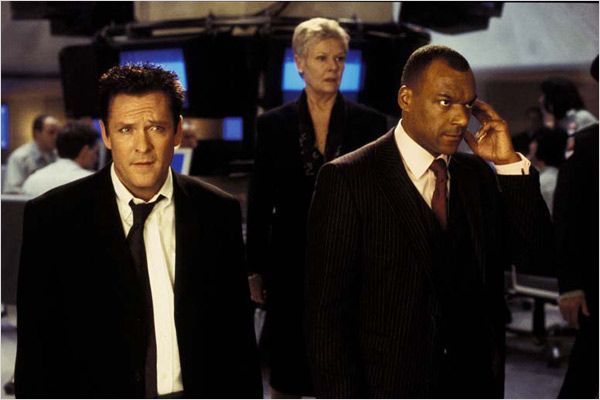
When Nazi inspired armies and would be Fantomas announced themselves by ghoulishly killing American citizens, U.S. Intelligence would send Operator 5 to eliminate them.  Real name, Jimmy Christopher he was James Bond before James Bond.  Perhaps, this is what inspired writer Chris Roberson to turn his Agency into a defacto MI-6, with a Judi Dench like M...


...and a Q, which always was short for quartermaster.


He's black because it's America and a melting pot, not the homogeneous white chocolate at the British counterpart.

Oh Snap!  

The agency orders the two operators, smooth they are not, to investigate the unusually bellicose behavior of world leaders everywhere.  The reason behind this trouble originates from a shaggy dog that served as a ludicrous plot twist for the James Bond film Diamonds Are Forever, a paragon for bad writing and bad taste.


By the by, the book Diamonds Are Forever by Ian Fleming is widely available and superior in every aspect: from its focus on Bond breaking a diamond smuggling ring to Bond's more meaningful relationship with Tiffany Case, who is much richer in character.  Avoid the movie.  Read the book.


Along the tour of the Cold War shenanigans, Roberson reintroduces readers to other heroes of the era, but he mostly botches his research.  While, yes, the public domain American Crusader, last seen in Project Superpowers, was indeed American, Black Venus, inexplicably becomes French.


Codename: Action reads tired, but as with many a Dynamite product, the art surpasses the weakness of the story.  Jonathan Lau's renditions are just gorgeous with vivid colors by Ivan Nunes. So, if you like the artwork, Codename: Wait for the Trade.

This was the worst issue of Ame-Comi Girls.  What with each issue of Jimmy Palmiotti's and Justin Gray's series knocking it out of the park every month, it's easy to make such a judgment.

Last issue, Gray and Palmiotti wiped out their entire universe and reformed it at the conclusion with the birth of New Genesis and Apokolips.  This issue picks up that thread in the last few pages with the introduction of Big Barda and a version of the Female Furies, but Palmiotti and Gray devote the lion's share to the excruciating Teen Hellions.


Gray and Palmiotti half-heartedly attempt to create a DC version of the Legion of Monsters.  They turn the Jesse Quick version of the Flash into a zombie, Raven into a vampire, a feminized Beast Boy into a werewolf, etc.  However, it doesn't quite add up. 

Zombies and vampires are undead.  So, while the speed feasting Flash is an interesting inhuman creature, you really can't call her a zombie.  Zombies are the hobos of the undead.  They smell bad, shamble and lack a dress sense.  The Flash cleans up well, and apparently the speed provides enough energy to keep her cells alive.  Her heart would have to beat as well.  All of this would stave off necrosis and prevent the odor decaying flesh, what with her actually being alive and everything.

Vampires aren't born.  They're made.  While Red Raven is vampire-like, she is the daughter of a human woman and Trigon, who is the antagonist of the issue.  So, yeah.  She doesn't sparkle, and she feeds on the blood of humans, but true vampire of legend? No.  Vampirella is more of a vampire, although she comes from the planet Drakulon and positively basks in the sun.

Cyborg and Starfire also serve on the team, but apart from the gender shift in Cyborg, they remain unchanged.  Trying to fit Cyborg into the Frankenstein archetype doesn't work.  She's too shiny for one thing, and the Frankenstein Monster's status as horrific depends on the patched together dead body parts.  None of that here, and Starfire remains Starfire.  So how is a beautiful alien princess a monster? Perhaps if she ate kiddie brains.


From the mind-blowing Gamera vs. Guiron

Tempest is the only real monster on the team.  She fits the mold of a bona fide Creature from the Black Lagoon.  Gray and Palmiotti fish in new 52 waters for one of the piranha men in the Trench, turn her into a piranha woman, well not really, and in regards to the the Beast Boy analogue, the werewolf association is a stretch, even with the Gypsy curse.

In addition to the flawed premise, Palmiotti and Gray rely on some of the most annoying cliches about teenagers to construct the team's interchangeable personalities.  They're a group of emotive, flighty girls obsessed with pop culture, and this cloud of Clueless conflicts with the intended drama of their battling demons and Trigon, who is a joke.


Gray and Palmiotti turn him into an estranged father who wants to spend time with his daughter.  Crap, I'm afraid.


The star book of the week is The Owl.  J.T. Krul with artists Heubert Khan Michael and Vinicius Andrade   continue develop the Owl's and the new Owl Girl's shaky relationship.  With this issue, a crime lord offers Owl Girl an offer that makes practical sense and accents the ease in which she could fall to the criminal's side.  It helps that Michael and Andrade make this character completely human and not a grotesque Dick Tracy type villain.  He's instead a sleazy European.  Molto Bene.


The Owl is mindful of Megan, his partner's granddaughter, but he's conscious that its her decision.  He plumbs the depths of his history for an episode that reflects his flawed humanity in the hopes of swaying her away from a dark migration.


Megan believes herself a champion, and she may be, but she also collects funds from the criminal element.  She destroys a drug operation, but she keeps the money and uses it as a means to keep herself afloat: a nice apartment, clothes, car, etc.  The Owl disapproves, but he can see that she's not really doing this for the money.  She wants to destroy crime.

Khan and Andrade display a strong sense of emotional conveyance in the quiet scenes focusing on Owl Girl.  It quite naturally creates a feeling of indecision and uneasiness that grants resonance to an already strong superhero vs super villain match of the week.

For that bout, the creative team orchestrate a classic rooftop duel against an assassin hired by Jasper, the diminutive mastermind bent on killing Owl Girl.  Even without Megan's angst, the story would have been notable for the speed in which Owl Girl attacks and the experience the Owl exhibits.  A good solid action-packed tale becomes reinforced with an underlying skeleton examining the slow build corruption of a crimefighter.

Tuesday, August 13, 2013

POBB: August 7, 2013


Pick of the Brown Bag
August 7, 2013
by 

Ray Tate


This week in the Pick of the Brown Bag, we discuss the merits of Action Comics, Ame-Comi Girls, Avengers, Batwing, Detective Comics, Earth 2, Lady Rawhide, The Owl, The Phantom Stranger and Swamp Thing.


Batman, The Phantom Stranger, Katana and Deadmen travel to the afterlife to question the deceased Justice League of America member slain by the Secret Society.  Unfortunately, we learn nothing new.  

The deceased was as surprised as anybody when Superman appeared to turn on his heat vision leading to an impromptu barbecue.  So if all you're looking for is a Trinity War tie-in, you can probably save your money and/or wait for this issue to be collected in the trade paperback. 

Despite The Phantom Stranger's tenuous connection to the Trinity War, I didn't feel cheated.  I first encountered the spooky hero in Bob Haney's and Jim Aparo's The Brave and the Bold.

Maybe it's because Jim Aparo could draw anything and anybody, or maybe the concept of the Phantom Stranger attracted me, but I immediately thought that this character was cool.  

As my comic book collection grew, my interaction with the Phantom Stranger became stronger.  Thanks to the one-hundred page giants sold for a dollar back in the Bronze Age, I learned that the Phantom Stranger began as a debunker of phony hocus-pocus, and maybe this is what led me to form my own theory about the Phantom Stranger's identity.  I believed the Phantom Stranger would turn out to be Batman, from the far future.  


In my conception, Batman finally won; he permanently destroyed crime in Gotham City.  With the Justice League he defeated the major criminal organizations and deadly villains that threatened the planet.  His loves were dead.  His family had moved on to start their own lives.  So, the Lords of Order or Chaos asked Batman to be their champion in the battle against supernatural forces that still remained unchecked.  These forces would play out through time and space because the supernatural never had regard for physics.  So, Batman ended up rejuvenated as the Phantom Stranger, and he would cloud the minds of his colleagues and his younger self's perception when in the past to prevent his former incarnation from seeing his future.

DC never went there, instead during the post-Crisis, the Powers That Were offered four different beginnings for the Phantom Stranger.  Two of these possibilities play in the subplot of the Stranger's alienation from heaven.  Heaven in the DCU isn't the classic version of white robes and harps.  Writer J.M. DeMatteis describes heaven in a different way.  There are apparently as many levels of heaven as there are in Dante's hell.  Some of these realms within heaven are surprisingly dangerous and open to invasion.  Personal paradises may also be a little too perfect.

DeMatteis' never before expressed any sexism in his characterization for other female characters.  So I don't believe he meant for Katana to get the short end of the stick because of her gender.  It just turned out that way.  Apart from the skin quotient, Katana also has her heaven ripped away from her, and she reacts badly to the Phantom Stranger's interference.


What befalls Katana can be dismissed to her relative inexperience in the superhero field.  This version of the swordswoman never joined the Outsiders and never learned from Batman's example.  

While Batman and Deadman shake off the seductions of the afterlife, no hero succeeds in this book.  The heroes' quest is in vain, and unfortunately, protocols in the afterlife preclude the Phantom Stranger's plan B.

Fernando Blanco gains something nobody can take away.  Previously, Blanco illustrated the Phantom for Moonstone.  Now, he plies his talent to Batman and the Phantom Stranger.  Aware of the opportunity, Blanco puts his all in the effort.  As a result, the artist provides a compelling visual narrative and resonant versions of these classic characters.

In Action Comics, Scott Lobdell's hilarious narrative voice and wry dialogue frame the battle between Superman and new characters Pax Galactica against a weird monster that seeks to destroy the earth. 


Yeah, that's him.

In a reduced sense, there's nothing really new here except that sense of humor, an element seldom associated with Superman's adventures.  Oh, and of course Lobdell imbues Superman with sincerity in his charge to protect the planet.  There's also a sign of the new attitude fostered by the new 52.  No long drawn out battles.  This baby was done in two issues.  He's Superman.  He doesn't need any more time.

The creature's origin and design expresses artist Tyler Kirkham's unbridled imagination, and it's neat that the reader will likely assume the same thing about the nature of the beast as the Man of Steel for precisely the same reasons.


Kirkham impresses with the display of the creature and scenes of Superman in action.  The artist's loving attention to the curves of Lourdes, Pax Galactica's queen is easy on the eyes.  


Though why oh why the High Heels?

All in all, this issue ends up being a strong monster-of-the-week issue of Action Comics well worth adding to your collection.

Jon Layman's Detective Comics is also a monster-of-the-week type of book, but it's mostly bog standard.  Batman fights the Wraith, his opposite number.  Batman fights criminals.  Wraith kills cops. Batman builds a family.  Wraith structures an expendable clutch.


There's a shred of interest in the mirroring of the battle between alter-egos Bruce Wayne and E.D. Caldwell, but the best scene in Detective occurs when Batman wordlessly wipes out Mr. and Mrs. Walters, Caldwell's bodyguards and right hands, in what amounts to the span of a heart beat.

Nevertheless, writer John Layman doesn't have much of a story here.  He tries to add meat to the bones by opening the book with the revelation that Batman actually knew Scold, Wraith's former Nightwing, but that addendum doesn't go anywhere.  Alfred gets to do a little Mike Westen type surveillance.  Artist Jason Fabok is the real saving grace.  He turns the Wraith into a monster built of Kevlar and electrical hate.  Batman is a brutal fighter, and the timing of what happens off panel is just as important as what occurs within plain view.

Batman's former 1940s mockingbird, the Owl features in a stronger story that at once reveals the fate of the original Owl Girl and the identity of the new Owl Girl he encountered in the premiere.  


Writer J.T. Krul conveys the Owl's deep sadness over the loss of his partner in crime fighting and personal life.  The Owl furthermore expresses a humane viewpoint when fighting crime.  Fortunately the Owl gained a new power during his confinement in Pandora's Urn (Box) to counter modern crime's escalation by technology and social devolution.    

The Owl expresses an interesting philosophy concerning the ill gotten goods of the enemy. The Owl Girl's use of the spoils to fund her war against crime is perfectly logical.  The Owl's more emotional basis appeals on a fundamental level, and it exposes a rationale for possessing a secret identity to make money the usual way.  

I see salient points in both points of view.  If you were robbed on the street, and you somehow overcame the gunman, then robbed him to get even, you would really be rolling him for money that wasn't his in the first place.  On the other hand, the money, petty cash or not, will likely not be returned to the rightful owners.  This is why Zorro always dropped off the ill-gotten goods at some sort of mission.

There is a middle ground.  If you were a vigilante and you used the money you took for actual expenses in the fight against crime, buying say new body armor, but turned over the lion's share to charity--Doctors without Borders for instance, definitely not the Church--you would probably still embrace the moral side. 

The new Owl Girl steals from the crooked and gives to herself.  She doesn't isolate the funding for her suit and weapons but also maintains a spacious apartment.  Megan's capricious use of the money sets off the Owl, and what I like about the scene is that the Owl isn't patronizing her.  This is a clash between a traditional hero and an urban vigilante corrupted by a want for vengeance.  She's what Batman could have been.


The old Topps Zorro series written by Don MacGregor and illustrated by Mike Mayhew introduced a female counterpart to The Fox.  Lady Rawhide was visually designed to be a bad girl, but MacGregor gave her heart, refusing to make her either completely good or bad.  I was very surprised to see Dynamite re-introduce this character to comics.  Afterall, Zorro did not belong to Topps, and Lady Rawhide was not created for Topps.  As expected there was a minor brouhaha about creator rights between MacGregor and the Powers at Dynamite.  This appears to be settled, as both MacGregor's and Mayhew's names appear in the credits.

So, on with the new adventures of Lady Rawhide. Red Sonja's and Vampirella's Eric Trautmann is no stranger to female adventurers, and he doesn't disappoint here.  


Trautmann opens the tale with a train robbery, and still weaning himself away from the depth of descriptive writing Robert E. Howard once employed, Trautmann takes the time to detail things that probably wouldn't concern another writer.  

Does knowing the history of the train or the governor of California make the story any better? Now that the caption is there I'd find it difficult to take out.  So maybe Trautmann's narration, wholly fictional but based on history, does in fact add a layer to the tale.


The robbers end up in a firefight with recognizable uniforms from the Zorro era, but there's a casualty of this criminal crusade that will play a part later in the story.  While this is happening, Lady Rawhide revels.


Trautmann doesn't do much to what's not broken.  He preserves the origin of Lady Rawhide, clearly explains that she's on nobody's side and in this sequence through Milton Estevam's excellent artwork nuances her with a little more personality in dialogue and narration.  It's a good start for the new adventures of the lady in red and reflects richer characterization Trautmann imbued to Red Sonja and Vampirella.


The sixth issue of Ame-Comi Girls ends surprisingly.  Scribes Jimmy Palmiotti and Justin Gray take the women into war against Sinestra and in the process bang sense out of crappy post-Crisis Big Stupid Events.  No.  That gives way too much credit to the Powers That Were.


Gray and Palmiotti take the tiniest grain from incomprehensible messes and/or wastes of time to produce something so elegant that the plot's razor-sharpness almost hurts.

At the same time the plot allows for some fantastic yet plethoric superhero action courtesy of artists Eduardo Francisco, Horacio Domingues, Ruben Gonzalez and Wes Hartman.  All these gentlemen's individual styles blend beautifully together for a dynamic exploration in super heroics.


In Batwing Palmiotti and Gray clean up loose ends. Batman his new protege rescue Lucius Fox from the hilarious multitude of low-intellect criminals known as the Marabuntu.  Watching Batwing decimate the forces of these ant-goofs is grin-growing gratification.  Equally comedic is the way the head of these lunatics meets his comeuppance in a shocking endnote.


Apparently, the Big Bad behind the abduction realizes the mistake in employing the Marabuntu, as does his new assassin in a hilarious scene.  You can see her on the cover.  So, it's no spoiler to say that Gray and Palmiotti reintroduce Lady Vic to the new 52.


Lady Vic was created by Chuck Dixon and Scott McDaniel as a foil for Nightwing, in the first volume of his eponymous serious.  There wasn't much to her.  She was British, sported a wicked costume--expected from McDaniel--and a professional.  Palmiotti and Gray break little new ground with the character.  No need.  Although they do use her a little differently.

We have heard numerous stories about gang rapes in India, Saudi Arabia and even during what appeared to be an optimistic moment in history, Egypt.  Palmiotti and Gray take a moment to use Lady Vic to dish out some justified catharsis.  She's a bad guy, yeah, but Palmiotti and Gray know that some bad guys in some instances can do some good.  The duo use what little depth Lady Vic maintains.  She's a woman.  She's part of the sisterhood, though for the right price she would gladly thin the membership.

Gray and Palmiotti save the meeting between Lady Vic and Batwing for the conclusion.  Things don't go well for our young hero.  It's a fitting capper for what amounts to a bad day in the life of Lucus Fox.


Previously our young hero seemed to have the luck of the Irish.  The hot redhead must have been a fluke.  This issue the troubles that come with a secret identity pile on Lucas.  His family, his ex-girlfriend all drop on him.  The cool thing about it is that Lucas pretty much accepts his the consequences and moves on.  He doesn't angst over it.

While Nicola Scott's and writer James Robinson's big blow out between the forces of good and evil is visually arresting, the latter half of Earth 2 surpasses the first.

In the second part Kendra, Hawkgirl, tracks down a lead to the murder of Green Lantern's lover and intended spouse Sam Zhao.  This leads her into a trap set by two new villains who amalgamate four classics from the Justice Society Rogues' Gallery.

Robinson then cuts to a battle in Gotham City pitting Big Barda and Mr. Miracle against the Fury.  This scene is a lot more fun than the slugfest in the opening act.  There's just a lot more going on beneath the surface.

First, Barda and Scott Free are practically the same as they were in the pre-Crisis.  Second, Robinson takes another impenetrable mess--The Fury--from the post-Crisis and reorganizes the character so she does make sense.  Third, Nicola Scott's artwork here is far more engaging because of the grandstanding nature of Mr. Miracle who performs an awesome escape.  Are you paying attention Mr. Talon?

The kid friendly Avengers offers a new take on the Bronze Age introduction of Ant-Man.  Scott Lang steals Hank Pym's costume to save his daughter Cassie.  Writer/Artist Joe Caramanga however introduces several new details and smudges a few of the previous plot points.

In the original, Cassie suffered from a congenital heart defect, actually a pretty interesting one.  Caramanga simplifies the problem to be a blood disorder.  Curable but expensive.  Also, in the original, Hank Pym had abandoned his Ant-Man identity in favor of Yellow Jacket.  He spied on Scott Lang's progress as Ant-Man.  Scott intended to steal from Cross Tech, but instead tumbled onto a kidnaping scheme victimizing Dr. Erica Sondheim who later helps Cassie.

In the all-ages universe of the Avengers, Hank Pym is still Ant-Man.  So, Scott steals his identity not just his costume.  He's also in this for the money, working for frequent Marvel baddie Crossfire.  Although this version of Crossfire is a sophisticated Bond like villain, not the special ops type assassin.

The most obvious change in the story involves Heroes for Hire Luke Cage and Iron Fist.  Their inclusion takes an otherwise straight forward drama into the realm of funny, and Caramanga keeps them in good form for the excursion.


There's an Even Funnier Unbreakable Skin Moment in the Avengers

Last but not least Swamp Thing should dispense with any trepidation one might feel in sampling Charles Soule's run.  This was his first genuine horror tinged story for Swampy, and while I wasn't totally all in on the plot, involving a magical whiskey tree for a small Irish village, the entanglement of John Constantine and the change in attitude really sells the talent.

When I read the Alan Moore Swamp Thing, one of the drawbacks I felt was that Swamp Thing was too timid, and he always seemed outmaneuvered by Constantine.  It's the new 52, Alec Holland is Swamp Thing, and he is kick ass.  Not only does Alec solve this problem, with a strong contempt for those affected, he does so without the Green empowering him.


When Alec reconnects with the Green, he resists temptation and recognizes the innocent from the guilty.  Constantine is seriously guilty, and Alec tends to that particular weed quite beautifully.  He promises an even more serious reckoning should their paths cross again, which is exactly the kind of willpower I'm looking for in a Swamp Thing.  Soule combines Alec Holland's genius, Swamp Thing's abilities and Alec's strengths in personality to cultivate a truly awesome super hero for the horror backdrop.